


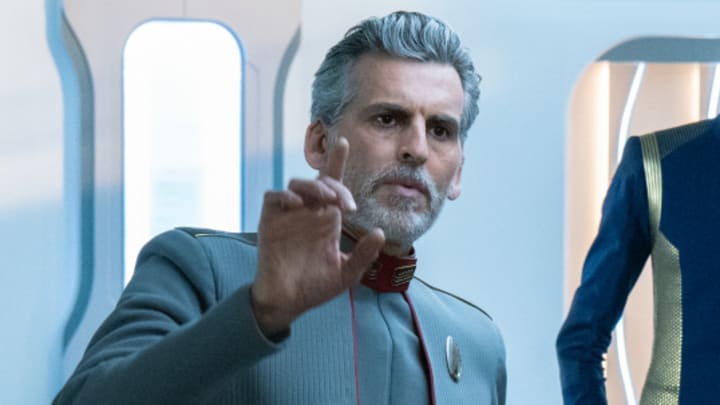
Admiral Vance doesn't fit Badmiral mold
Charles Vance was introduced in Discovery’s third season as the hard‑pressed commander‑in‑chief trying to keep a diminished 32nd‑century Federation alive after the Burn. He made unpopular calls, from rationing dilithium to demanding risky missions, but the narrative has consistently framed him as a pragmatist doing damage control rather than a glory‑seeking tyrant. Even when he clashes with Michael Burnham, the show underlines that they share the same goals; Vance is the guy who sends heroes into danger, not the one who engineers the crisis for personal gain.
That’s where Fehr’s quote becomes important: he explicitly ties Vance’s harshness to “decision‑making for the positive” and “trying to find the most positive solution,” which is the opposite of the classic Badmiral who weaponizes the chain of command.
In other words, Vance occupies a sweet spot Trek rarely explores: the exhausted bureaucrat who still believes in the mission statement, even when the spreadsheets say otherwise. Fehr also sounds genuinely protective of that space, clearly relishing the chance to play a tough but fundamentally decent leader instead of the standard-issue turncoat in dress whites.
What’s fascinating here is that Fehr is basically voicing what a lot of modern Trek fans have been wanting from Starfleet command for years: complexity without the automatic heel turn. TNG needed “bad” admirals because the show’s optimistic tone meant the conflict had to come from somewhere, but in an era where Discovery and Starfleet Academy can dig deeper into institutional trauma, there’s more room for leaders who are flawed without being villains.