


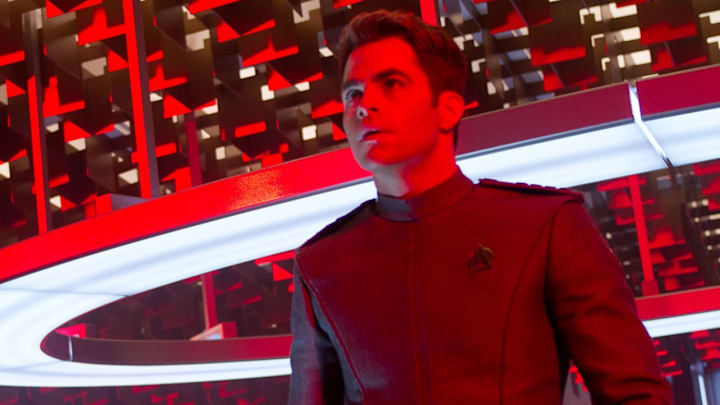
The Spectacle: Enterprise vs. Enterprise-D
The centerpiece of the film is the kind of FX set piece Trek fans have long imagined: the Constitution-class Kelvin Enterprise, nimble and overpowered for its era, facing off against the massive, war-hardened Galaxy-class Enterprise-D.
On one side, Kirk relies on daring maneuvers, three-dimensional tactics, and a crew used to punching above its weight. On the other hand, Mirror Picard commands with icy precision, treating civilian casualties and planetary collateral as acceptable “motivational examples.”
The battle becomes a visual metaphor for the philosophical clash: Starfleet’s exploratory vessel versus the Empire’s symbol of domination. The Enterprise darts through the Enterprise-D’s blind spots, while the ISS-D answers with barrages so powerful that each hit feels like a small supernova.
Imagine the Kelvin Enterprise skimming the atmosphere of a nearby gas giant to confuse sensors, warp trails flickering through storms, while the bulkier Galaxy-class monster cuts through like a guillotine. Shields flare, hull plating shears away, and both crews slowly realize they’re fighting distorted versions of the same legacy; echoes of James T. Kirk and Jean-Luc Picard across history.