

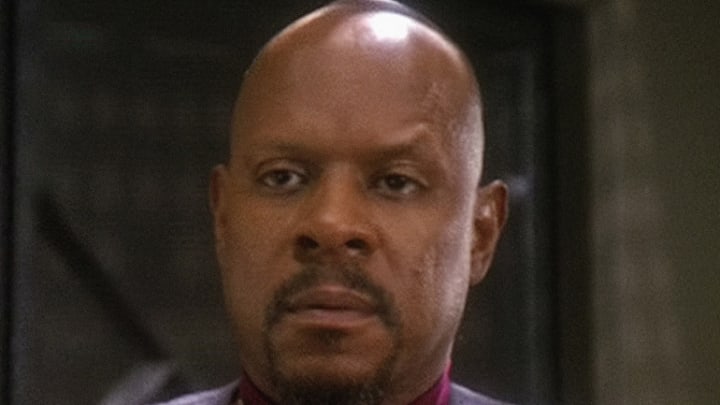
Star Trek: Starfleet Academy just delivered the kind of Deep Space Nine follow-up many fans have been waiting decades to see, and writer–star Tawny Newsome made it clear in her interview with TrekMovie.com that honoring Avery Brooks’ wishes for Benjamin Sisko was at the heart of that effort. Her comments underline that the episode wasn’t just a nostalgia play; it was a deliberate attempt to reckon with DS9’s ending and what it meant for a Black father who promised his family he’d come back.
"It was massively important to all of us in the writers room to honor that request," Newsome said in the interview. "And then we had to square that with the fact that we have seen a lot added to the canon, and there hasn’t been any mention of seeing him."
Newsome continued by saying:
"So that puts you in a little bit of a storytelling quandary. How do we say this man came back, yet nobody’s talked about him, and we haven’t seen hide nor hair of him? So we sort of had to get into the territory of something that maybe science and Starfleet records can’t explain. So that’s why we wanted to put it in Jake’s mouth at the end where he literally says, “I can’t prove it. But all those things you think he missed, he didn’t. He was there.”
Brooks originally pushed for Sisko to explicitly promise he would return in "What You Leave Behind," so the character wouldn’t be framed as a father who simply walks out on his family. That change reshaped DS9’s finale, but the franchise never followed through on showing Sisko’s return, even as later shows filled in more of the 24th–25th century timeline.
Starfleet Academy’s DS9 tribute episode picks up that loose thread by centering Jake Sisko and the mystery of what really happened to his father, layering in a voiceover from Brooks while still admitting there’s no “official” proof in Starfleet’s records.
What stands out here is that Newsome and the writers didn’t chase a lore checkbox; they went after emotional canon, the thing DS9 fans have been carrying since that final goodbye on the station. Letting Jake say “I can’t prove it” is a smart compromise between continuity and closure, preserving the idea that Sisko kept his promise without rewriting twenty-plus years of Star Trek history.
For a franchise that sometimes leans too hard on cameos and spectacle, this feels like the rare modern Trek move that understands why Sisko and his family matter, and treats Brooks’ original concern not as trivia, but as a responsibility.
For more Star Trek content, visit the Redshirts Always Die Facebook and X pages.
 Add us as a preferred source on Google