

5. James T. Kirk
Kirk’s inclusion in Strange New Worlds was always going to be the most precarious move, given how iconic and heavily scrutinized the character already is. The series wisely avoids recreating the swaggering captain fans know from the five-year mission, instead presenting a still-forming officer whose strategic mind and instinct for the big gamble are present but not yet mythic.
Alternate timeline appearances and “what if” scenarios help the show experiment with Kirk's personality without locking those choices into the prime timeline too early.
Even with that smart framing, Kirk’s ranking slips compared to the others because his legacy footprint on SNW remains relatively light and inherently constrained. The show uses him best as a catalyst for other characters, especially La’an, rather than as a central focus in his own right.
That restraint is probably wise for canon, but it means that, so far, his Strange New Worlds incarnation feels more like an intriguing sketch than a full reinterpretation. Among the five core legacy figures, he lands last not because the portrayal is weak, but because the others simply have more room to transform and define the prequel era.
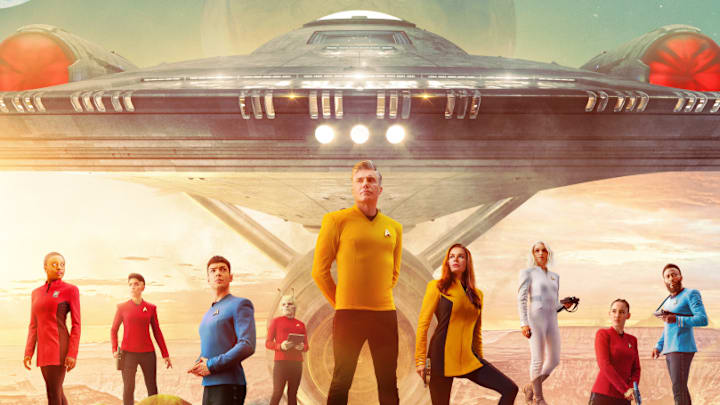
Strange New Worlds works because it doesn't treat its legacy characters like museum pieces. Instead, it lets Pike, Spock, Chapel, Number One, and Kirk grow in ways that are emotionally honest while also hinting at who they will become in The Original Series era. Some choices cause debate, especially with romantic subplots and changing backstories.
But that tension is part of the show's main challenge: how to honor decades of canon while keeping these characters in place. No matter how fans might rate them, this Enterprise crew shows that Star Trek's past can still surprise, thrill, and sometimes even provoke. This strongly reaffirms why these names are worth looking back at in the first place.
For more Star Trek content, visit the Redshirts Always Die Facebook and X pages.