

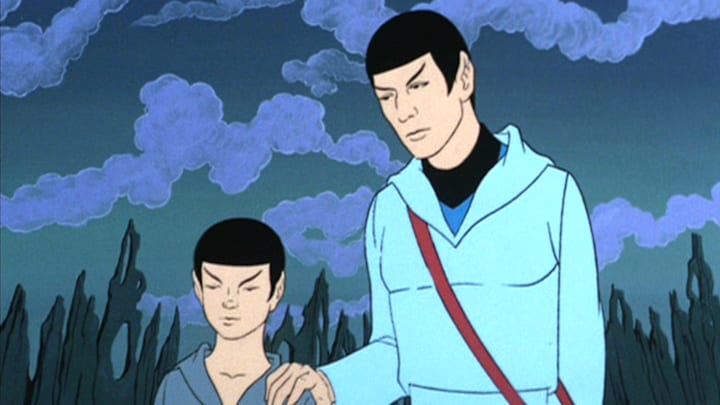
Why Yesteryear is so wonderful

The reasons why this episode worked so effectively are hard to summarize, yet they all came together. Time travel plots are always good fodder for a top Trek episode and exploring Spock’s past was also smart. Having Mark Lenard voice Sarek helped the tale, as we got insight into Spock’s upbringing and how his half-human nature made him a target of bullying and disapproval, the latter from his own dad.
Leonard Nimoy’s voice work was impeccable, nailing every nuance of Spock, hiding his fear of being erased from existence while the rational part of his mind tried to uncover the truth. William Shatner balanced it out as Kirk helped.
A fantastic bit was Thelin pushing Spock to correct the timeline, acknowledging that it might alter or even erase his own life, but he was willing to make that sacrifice, proving he really was fit for Starfleet.
The payoff was the dramatic conclusion as the young Spock had to make that fateful choice. Billy Simpson was masterful as the younger Spock, selling his early emotions and his work with Nimoy’s Spock giving his younger self advice sucked you in. That emotional ending truly made you feel for both Spocks and the understanding of how he turned out this way. It came to a bittersweet ending that was Trek at its finest.
The episode’s legacy is intact. It was nominated for a Daytime Emmy, and lists of the best Trek episodes across the franchise often put it in the top 10. It’s been celebrated by fans since and is easily the best episode of this animated outing, setting a bar the rest of the series couldn’t measure up to.
The only quibble with the story is that it’s animated, not live-action. Seeing Nimoy in person interacting with a young actor in his role would have been more effective thanks to Nimoy’s performance. Yet even in this animated form, “Yesteryear” is hands-down one of the all-time must-watch episodes of any Trek series. It's no wonder it remains a magical tale.
For more Star Trek content, visit the Redshirts Always Die Facebook and X pages.
 Add us as a preferred source on Google