

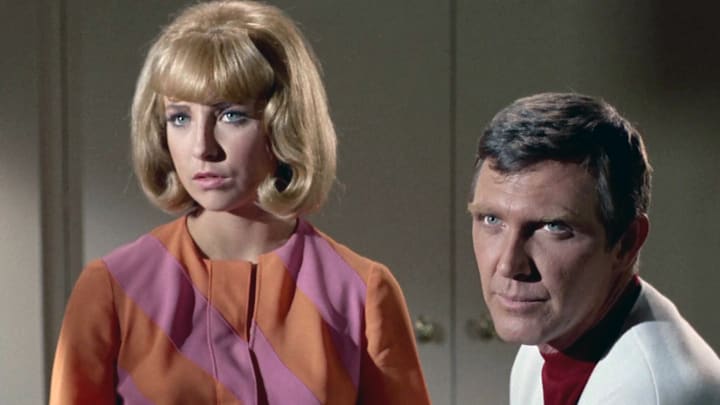
When “Assignment: Earth” aired in 1968, it closed out season 2 of Star Trek: The Original Series with a not-too-carefully disguised backdoor pilot for a potential new series. Even though cliffhangers weren’t as common in the 1960s, ending the season with a story that sidelined the regular cast in favor of new characters was an unusual move.
On its surface, the episode offered a familiar setup: the Enterprise traveled back to 20th-century Earth to observe a pivotal moment in human history. What follows, however, was less a Star Trek story than a foolish showcase for guest stars viewers never signed up to follow.
Captain Kirk (William Shatner), Mr. Spock (Leonard Nimoy), and Dr. McCoy (DeForest Kelley) encountered Gary Seven, a mysterious human operative working for unseen extraterrestrial supervisors tasked with keeping Earth from destroying itself.
Gary Seven, played with cool, self-assured authority by Robert Lansing, was immediately positioned as the most competent person in the room. He knew more than Kirk, outmaneuvered Spock, and treated the Enterprise crew less like equals than temporary inconveniences.
That emphasis was no accident. Gene Roddenberry conceived “Assignment: Earth” as a springboard for a contemporary-set series focused on covert alien intervention in human affairs, a kind of Cold War sci-fi spy drama. To that end, the episode devoted significant time to establishing Seven’s world, his technology, and his supporting cast, most notably Roberta Lincoln, portrayed by Teri Garr in an early and energetic television role.
Garr brought charm and comedic timing to Roberta, but her function was clear: she wasn't there to enrich Star Trek, she was there to sell the next show. For the record, Garr later admitted she hated her Star Trek experience. (Continued...)
 Add us as a preferred source on Google