

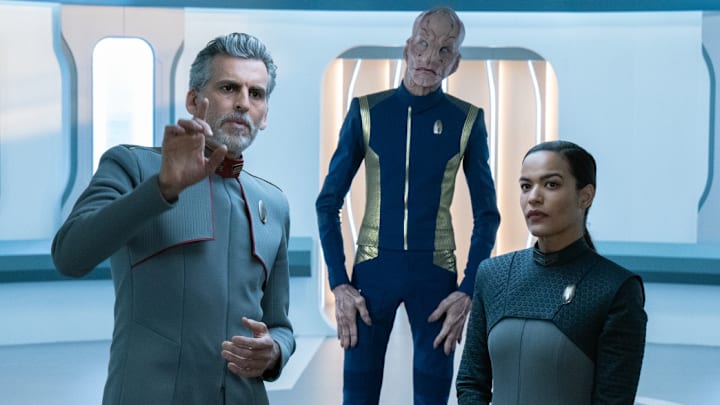
Star Trek: Discovery may have wrapped its five‑season run, but Oded Fehr isn’t done exploring what Admiral Charles Vance looks like in a galaxy that’s finally had room to breathe again. As Star Trek shifts into the cadet‑focused Star Trek: Starfleet Academy, Fehr is opening up about how the admiral has changed in the quieter, post‑crisis era, less daily survival, more rebuilding, and what that means for the show’s tone.
When asked about the time gap between Discovery and Starfleet Academy, and what Vance has been up to, Fehr confirmed that Star Trek’s newest series is set several years after Discovery’s finale, in a calmer rebuilding era where the Federation is no longer in day‑to‑day survival mode and has had time to reestablish Starfleet Academy. Fehr, whose character isn't stationed in San Francisco where much of the show takes place, said via TrekMovie.com:
"No, I think Admiral Vance is still back in Federation Headquarters, that big ship that he had. We don’t get to see it, because the new ship is so much more interesting. And the sets are just incredible, by the way. The sets for this college, it’s just beyond. They’re stunning. They’re huge. They’re just beautiful and gorgeous and so wonderful to work on. But, I think you know time’s now passing a little slower when you don’t have to try and survive every day."
Fehr continued by saying:
"Thing[s] move a little slower. I think it took him time to set up this Starfleet Academy again and be able to find the right way of coming to Captain Ake, and asking her to become the chancellor. So, yeah, I think he’s trying to find in himself, also, the small changes that are going to start to be more optimistic, a little lighter, a little funner."
Fehr and others have framed the new show as arriving after a several‑year breather from Discovery’s galaxy‑ending crises, with reports pointing to a roughly four‑year gap while the Federation consolidates its recovery and shifts the Academy back to Earth.
Admiral Vance, meanwhile, remains stationed at 32nd‑century Federation Headquarters as commander‑in‑chief, the same massive USS Federation starbase‑ship we saw in Discovery, even if the Academy‑focused storytelling means the camera now lives aboard the USS Athena and among cadets on the ground.
That separation between where Vance works and where the series is centered helps explain why he feels a bit like a distant architect in Fehr’s description, still pulling big levers, but giving the day‑to‑day spotlight to Chancellor Ake and her students.
What’s exciting about Fehr’s comments is how clearly they signal a changing tone for both Vance and the franchise in this era. Discovery often kept him in crisis‑mode, juggling the Burn, the Emerald Chain, and universe‑level existential threats, but by the time of Starfleet Academy, that relentless survival mindset has given way to something closer to classic Trek optimism: rebuilding, mentoring, and creating space for joy once more.
Framing Vance as the one who spent years quietly putting the Academy back together also adds emotional weight to the premise; he’s not just a recurring authority figure, he’s the reason these cadets even have a campus to complain about midterms on.
If the show leans into that, using Vance sparingly but meaningfully, as the steady hand who remembers the dark days and chooses to be “a little lighter, a little funner” anyway, it could give modern Trek one of its most satisfying long‑term leadership arcs yet.
For more Star Trek content, visit the Redshirts Always Die Facebook and X pages.
 Add us as a preferred source on Google